You have a recent tree removal or an old stump in your yard and you are weighing the options. Stump grinding vs stump removal is a common question for homeowners and property managers in Doylestown, PA, and understanding the difference helps you choose the right approach for safety, landscape goals, and future use of the site.
Stumps can create tripping hazards, attract pests, interfere with landscaping, and get in the way of new construction or plantings. Those consequences can feel urgent, and the choice between grinding and full removal is not always obvious without knowing the practical tradeoffs.
This article breaks down what each method involves, the practical differences in time and site impact, environmental considerations, and scenarios where one option is generally better than the other. The goal is to give you clear, usable information so your decision matches the needs of your property.
Stump Grinding vs. Stump Removal: What Is the Difference?
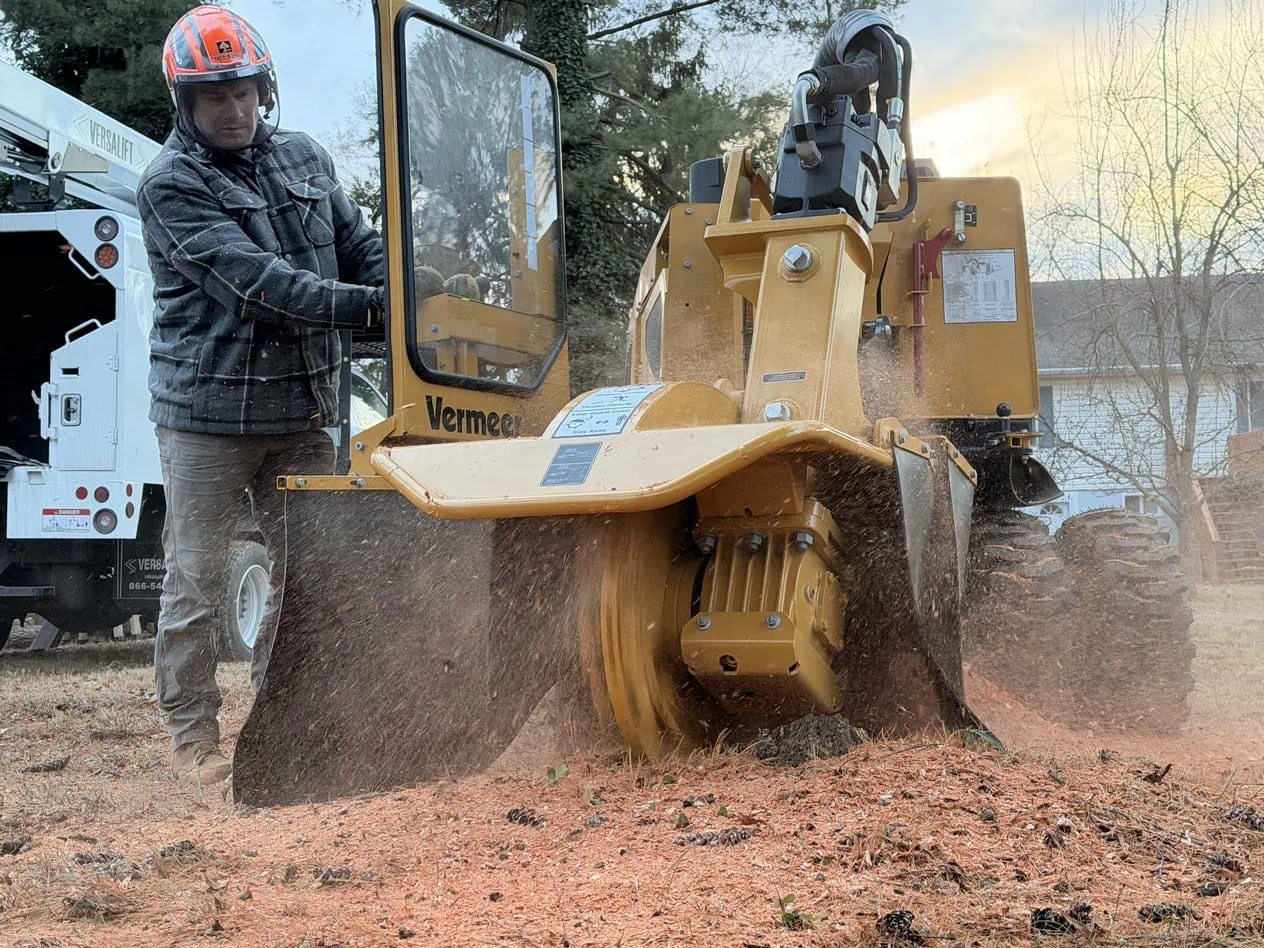
Stump grinding and stump removal are two different approaches to dealing with a tree stump, and they differ mainly in how much of the stump and root system are removed. Stump grinding uses a rotating cutting wheel to shred the visible stump down to a few inches below grade, leaving the main root system in the ground to decay over time. Full stump removal digs out the entire stump and as much of the root system as practical, leaving a hole that must be backfilled and regraded.
Both methods aim to eliminate the stump as an obstacle, but they create different outcomes for the site. Grinding typically leaves a mound of wood chips in the hole to be used as mulch or hauled away, while removal leaves a pit that needs soil and grade correction before planting or construction can proceed.
How Stump Grinding and Removal Equipment Works
Stump grinders are specialized machines with a high-speed cutting wheel that chips away wood. They are efficient at reducing the stump to small pieces and are well suited for confined spaces or where minimal disturbance is preferred.
Full removal often requires excavators or backhoes and may involve cutting major roots before lifting the stump out. This process disturbs a larger area and typically takes more time and crew coordination than grinding does.
How Time, Cleanup, and Yard Disturbance Compare
Grinding is generally faster and less disruptive to surrounding landscaping, while full removal takes longer and causes more soil disturbance. A grinding job might be completed in a shorter window because the machine focuses on the visible stump, and cleanup is usually limited to wood chips and a small depression to fill.
Full removal requires excavation, removal of root mass, and careful backfilling to restore grade. The cleanup process often includes hauling away larger root chunks and regrading the soil. Because of that, restoration after full stump removal can take longer before the area is ready for planting or construction.
For property owners considering future planting or a lawn replacement, the faster timeline and lower surface disturbance of grinding is a practical advantage. For projects that need stable ground for structures, the disturbance caused by full removal may be necessary to address structural root concerns.
You can read more about typical services and how professionals approach different tree work on our Professional Tree Services page. This detail matters because a careful review of the full situation can prevent avoidable mistakes and support a more reliable result.
When Stump Grinding Is the Better Choice
Stump grinding is usually the better choice when you want minimal soil disturbance, a quicker cleanup, and no need to remove the root mass completely. Grinding is well suited to yards where you plan to reseed, mulch, or plant small vegetation because the process leaves the root system largely undisturbed and does not create a large hole to fill.
Grinding also reduces the visible stump quickly and reduces tripping hazards without major landscape upheaval. In addition, the wood chips produced by the grinder can be reused on site as mulch or removed depending on your preference.
Keep in mind that grinding does leave roots in the ground, and they will decay slowly. For most homeowners that is acceptable, but it is important to consider what future use you have in mind for the exact footprint of the removed stump.
When Full Stump Removal Is the Better Option
Full stump removal is advisable when root systems threaten foundations, sidewalks, septic fields, or planned construction, or when invasive root species need to be eliminated. Removing the entire stump and as much root mass as possible reduces the risk of roots continuing to grow into structures or utility lines.
Before deciding on full removal because of structural concerns, it is wise to consider a professional inspection of tree and site conditions. A professional tree risk inspection involves a visual assessment of tree vitality, structural defects, and decay symptoms to prevent property damage. That inspection can inform whether stump removal is necessary to address underlying safety or structural risks.
If you are planning significant soil grading, building a deck, or installing a pool over the stump location, removal may be the more appropriate choice despite the heavier disturbance. This detail matters because a careful review of the full situation can prevent avoidable mistakes and support a more reliable result.
You can consult the Tree Service FAQs to see common concerns property owners ask about stump and root issues. This detail matters because a careful review of the full situation can prevent avoidable mistakes and support a more reliable result.
What Happens to Your Yard After Grinding or Removal?
Both methods have environmental tradeoffs, and restoration plans should account for wood debris, soil compaction, and desired future use of the space. Grinding produces wood chips that can be left as mulch, composted, or removed from the site. They also accelerate nutrient cycling as they break down.
Full removal disturbs soil and root networks more extensively, which can temporarily reduce soil stability and require backfilling with quality topsoil and possibly reestablishing turf or planting beds. Either approach benefits from thoughtful replanting or grading to reduce erosion and promote healthy regrowth.
If you want to preserve soil structure and minimize heavy equipment traffic across plantings, grinding tends to be gentler on the landscape. For major site work, removal offers a cleaner slate but requires more careful post-work restoration.
You can review background about who we are and our approach to tree work on the About Tree Boss page. This detail matters because a careful review of the full situation can prevent avoidable mistakes and support a more reliable result.
Safety and Cost Factors to Consider Before Choosing
Safety and professional judgment often determine which method is selected, because equipment size, root complexity, and nearby structures affect feasibility. Grinding is safer in congested areas because the grinder is smaller than excavation equipment, but both methods require trained operators and appropriate safety controls to protect workers and property.
Cost considerations are real, but they vary widely with stump size, root extent, accessibility, and site conditions. That variability is one reason a site-specific assessment is valuable. Experienced arborists and technicians evaluate the stump, root system, soil, and nearby utilities before recommending grinding or removal in order to align the method with safety and long-term landscape goals.
If you are comparing options, professional guidance will help you weigh tradeoffs based on the specific conditions of your yard. This detail matters because a careful review of the full situation can prevent avoidable mistakes and support a more reliable result.
Related Resources for Next Steps
For more detail, review Tree Boss’s Professional Tree Services page and its Tree Service FAQs resource before making a final plan. These pages provide additional context about the services and decisions discussed above, while keeping the focus on what applies to your property and priorities.
You can also explore About Tree Boss when that aspect of the project affects your situation. For independent background, a professional tree risk inspection involves a visual assessment of tree vitality, structural defects, and decay symptoms to prevent property damage offers high-authority educational guidance that supports a careful, informed decision.
Frequently Asked Questions
1. What Are the Long-Term Effects of Leaving Roots in the Ground After Stump Grinding?
Leaving roots after stump grinding usually results in gradual decay over time as microbes break down the wood. Tree Boss in Doylestown, PA notes that the remaining root structure typically does not resprout for most species, but large roots may take longer to decompose. You should expect the soil to settle somewhat as roots break down, and periodic regrading or topdressing may be required. For site-specific expectations, Tree Boss can provide an assessment in Doylestown, PA.
2. Will Stump Grinding Prevent Pests From Returning to the Area?
Stump grinding removes the aboveground portion of the stump that can attract pests, and the chipped material is less hospitable to some wood-boring insects when properly removed or used as mulch. Tree Boss in Doylestown, PA advises monitoring the site for signs of insect activity, especially if the stump was diseased or infested. Proper cleanup and removing wood chips from high-traffic or sensitive areas reduces the chance of pests being attracted. Tree Boss can explain pest risks for specific species in Doylestown, PA.
3. How Long Until the Area Is Ready for Planting After Stump Grinding or Removal?
After grinding, the site is often ready for light planting or seeding once the wood chips are removed or incorporated and the surface is leveled. Tree Boss in Doylestown, PA recommends waiting for any significant settlement after grinding before planting larger trees or installing structures. Full stump removal requires backfilling and soil settling time, and Tree Boss advises allowing the regraded soil to stabilize in Doylestown, PA before proceeding with major installations. Both approaches benefit from adding quality topsoil and appropriate amendments for best planting results.
4. Can Old Stumps Cause Problems Even if They Are Not Visible?
Yes, old or decaying stumps can present hazards if roots are close to walkways, driveways, or foundations and continue to shift soil or cause uneven surfaces. Tree Boss in Doylestown, PA emphasizes that partially buried stumps can create tripping hazards and may attract decay organisms that affect nearby plants. Regular site inspections help identify hazards before they become safety issues, and Tree Boss can advise on mitigation options in Doylestown, PA. Monitoring and addressing any soil heave or surface irregularities reduces long-term risk.
Conclusion
Understanding stump grinding vs stump removal starts with clear information, realistic priorities, and attention to the details that affect your property. Homeowners in Doylestown, PA can use the points in this guide to compare options, ask better questions, and make a confident next decision.
Get Professional Stump Grinding or Removal in Doylestown, PA
Tree Boss is a woman-owned, family-operated tree service with ISA-trained and TCIA-affiliated professionals who can evaluate whether stump grinding or full stump removal is the right option for your property. If you are in Doylestown, PA, use the company website or contact form to request an assessment or to learn more about the practical differences for your site. Our team will explain what to expect for restoration, timing, and safety so you can choose with confidence.